
Compare choices against the same assumptions
Use the model to check when proposed demand strains capacity and discuss which work can move.
STR-015 · Strategy
We model demand against team capacity for three services over 13 weeks.
Use the model to check when proposed demand strains capacity and discuss which work can move.
We model demand against team capacity for three services over 13 weeks.
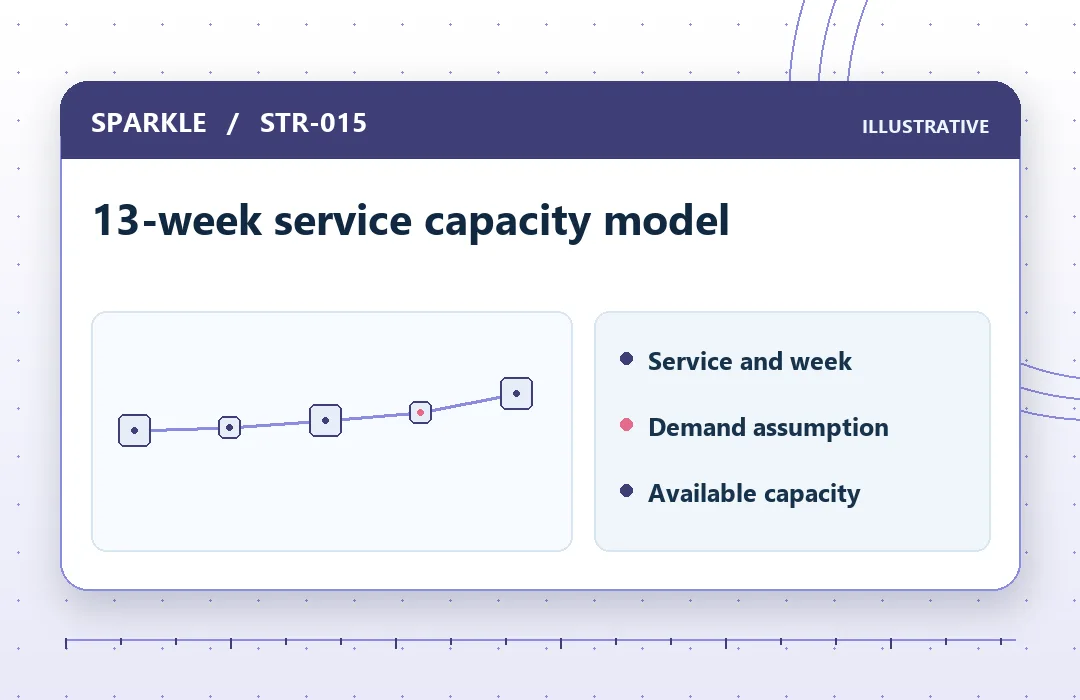
In the 13-week service capacity model, follow “Service and week”, “Demand assumption” and “Available capacity” to check the handover against your original question.
A healthy pipeline can turn into a delivery bottleneck if bookings and available staff effort are modelled separately. The service is intended for founders and managing directors. Use the model to check when proposed demand strains capacity and discuss which work can move. It is useful when your team can identify the decision the work needs to support and name someone to review what comes back.
Current plans, team capacity and assumptions for the period under review. Before work starts, explain how the result will be used, which inputs are already approved and whether access or material must come from someone else. Flag gaps in the current information early so they can be handled within the scope or recorded for follow-up.
Confirm demand and capacity assumptions, Model three services over thirteen weeks and Review the bottlenecks. The work takes place remotely through an agreed channel. We identify questions that affect the outcome, confirm where your team needs to make a decision and explain any assumptions that remain at handover.
Indicative delivery after agreed inputs are complete: 3–7 working days. Third-party data and work beyond the agreed business unit or market are separate. Timing may also depend on access, client review or decisions outside the agreed scope. Confirm who owns those dependencies before using the estimate for a launch or other commitment.
Begin by checking the 13-week service capacity model against the original question and the information your team supplied. Decide whether you can act on the result directly or need to collect evidence, obtain approval or commission a separate implementation. That distinction helps you turn the assignment into a practical next step.
Describe the extra work when you enquire. Any change to the published scope, file limits or timing needs separate written agreement.
Wait for instructions about the agreed channel. Share only the material needed for the assignment and confirm that your organisation has the right to share it.
We create three operating scenarios and agree early indicators and responses with one leadership team.
We build a 12-month operating calendar, resource assumptions and quarterly checkpoints for one unit.
Tell us about your business and the outcome you want to achieve.