
Write around the task
Use the topic tree and tags to make maintenance and discovery easier across the supported library.
DOC-019 · Documentation
We organise up to 80 articles into a topic tree with tagging and ownership rules.
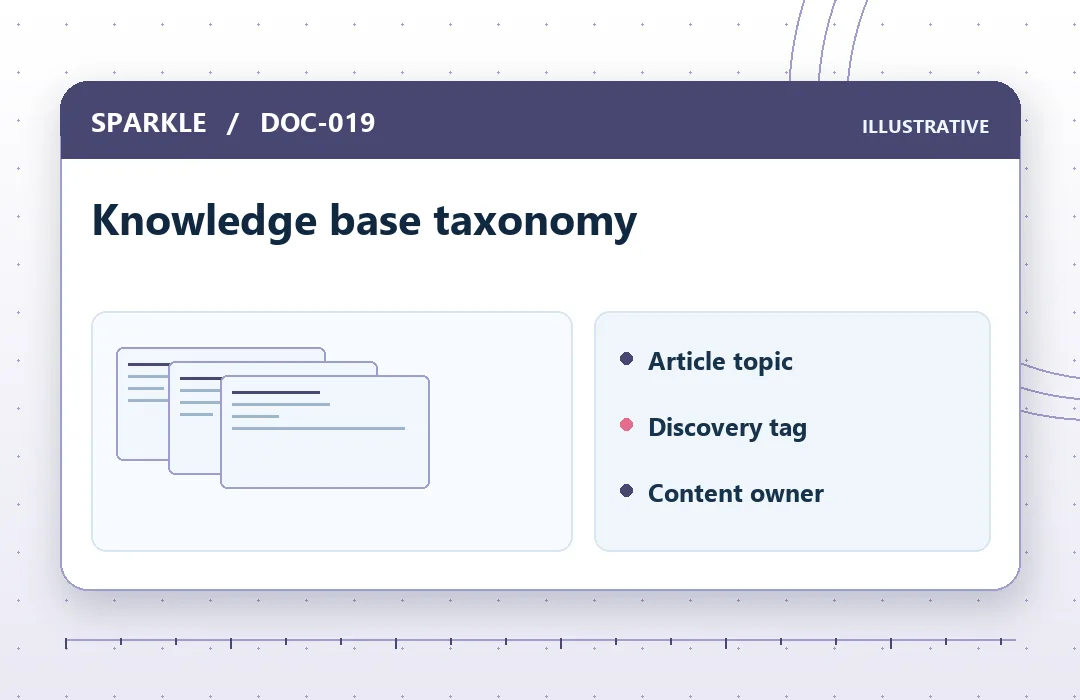
Use the topic tree and tags to make maintenance and discovery easier across the supported library.
We organise up to 80 articles into a topic tree with tagging and ownership rules.
In the Knowledge base taxonomy, follow “Article topic”, “Discovery tag” and “Content owner” to check the handover against your original question.
A knowledge base can feel large even when the right article exists if readers use different words from its category names. The service is intended for product owners and technical support teams. Use the topic tree and tags to make maintenance and discovery easier across the supported library. It is useful when your team can identify the decision the work needs to support and name someone to review what comes back.
Current documents or article inventory, terminology and content owners. Before work starts, explain how the result will be used, which inputs are already approved and whether access or material must come from someone else. Flag gaps in the current information early so they can be handled within the scope or recorded for follow-up.
Inventory up to eighty articles, Group topics and design tags and Assign content ownership rules. The work takes place remotely through an agreed channel. We identify questions that affect the outcome, confirm where your team needs to make a decision and explain any assumptions that remain at handover.
Indicative delivery after agreed inputs are complete: 3–7 working days. Product fact approval stays with the client. Translation and third-party licences are separate. Timing may also depend on access, client review or decisions outside the agreed scope. Confirm who owns those dependencies before using the estimate for a launch or other commitment.
Begin by checking the knowledge base taxonomy against the original question and the information your team supplied. Decide whether you can act on the result directly or need to collect evidence, obtain approval or commission a separate implementation. That distinction helps you turn the assignment into a practical next step.
Describe the extra work when you enquire. Any change to the published scope, file limits or timing needs separate written agreement.
Wait for instructions about the agreed channel. Share only the material needed for the assignment and confirm that your organisation has the right to share it.
We create a six-page technical writing guide with examples from the client’s own documents.
We score 60 articles on accuracy evidence, age and usability and prioritise updates.
Tell us about your business and the outcome you want to achieve.