
Match the method to the question
Use repeated needs in historical notices to inform which capabilities or evidence to prepare for future opportunities.
RES-028 · Research
We analyse up to 20 historical public notices for one sector and identify repeat buyer needs.
Use repeated needs in historical notices to inform which capabilities or evidence to prepare for future opportunities.
We analyse up to 20 historical public notices for one sector and identify repeat buyer needs.
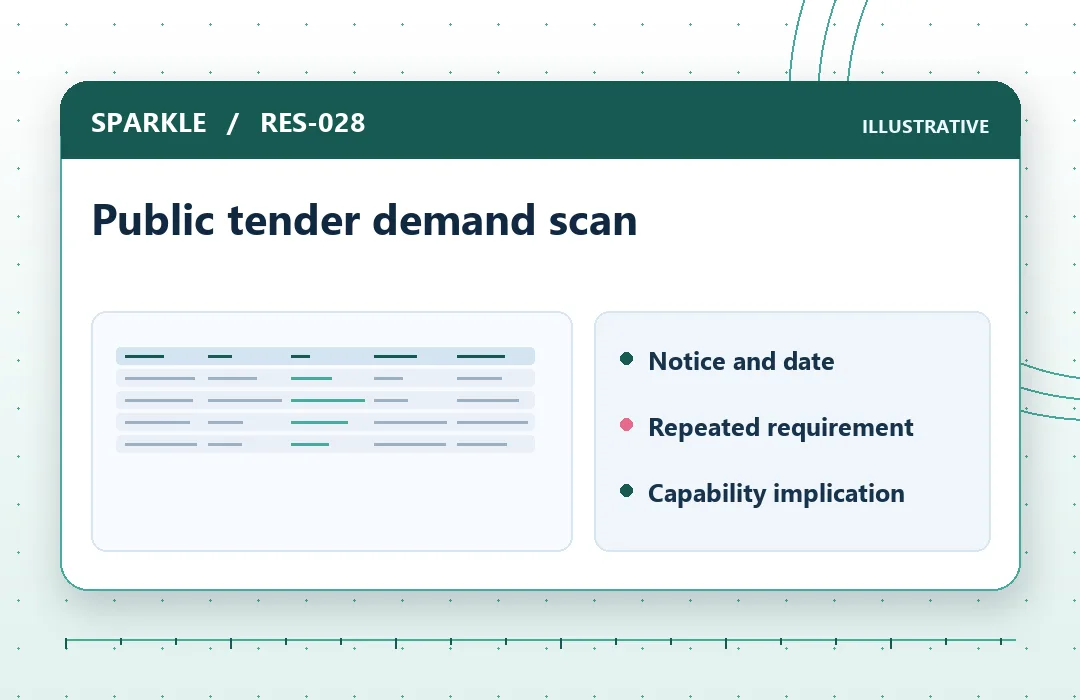
In the Public tender demand scan, follow “Notice and date”, “Repeated requirement” and “Capability implication” to check the handover against your original question.
A few current tenders may obscure buying requirements that recur across a sector over time. The service is intended for product, marketing and strategy leads. Use repeated needs in historical notices to inform which capabilities or evidence to prepare for future opportunities. It is useful when your team can identify the decision the work needs to support and name someone to review what comes back.
The sector or research collection, time window and intended decision. Before work starts, explain how the result will be used, which inputs are already approved and whether access or material must come from someone else. Flag gaps in the current information early so they can be handled within the scope or recorded for follow-up.
Confirm the sector and notice dates, Review up to twenty past notices and Group recurring buyer needs. The work takes place remotely through an agreed channel. We identify questions that affect the outcome, confirm where your team needs to make a decision and explain any assumptions that remain at handover.
Indicative delivery after agreed inputs are complete: 3–7 working days. Recruitment, panel costs, incentives and licensed research data are separate. Timing may also depend on access, client review or decisions outside the agreed scope. Confirm who owns those dependencies before using the estimate for a launch or other commitment.
Begin by checking the public tender demand scan against the original question and the information your team supplied. Decide whether you can act on the result directly or need to collect evidence, obtain approval or commission a separate implementation. That distinction helps you turn the assignment into a practical next step.
Research conclusions depend on the available evidence, sample and method. Document assumptions before using findings for a commercial decision.
Describe the extra work when you enquire. Any change to the published scope, file limits or timing needs separate written agreement.
Wait for instructions about the agreed channel. Share only the material needed for the assignment and confirm that your organisation has the right to share it.
We organise 30 research items with tags, source dates, consent fields and retrieval instructions.
Tell us about your business and the outcome you want to achieve.