
Keep exceptions visible
Use the specified triggers and test cases to agree expected behaviour before commissioning implementation.
AUT-005 · Automation
We specify triggers, fields, error paths and acceptance tests for one proposed integration.
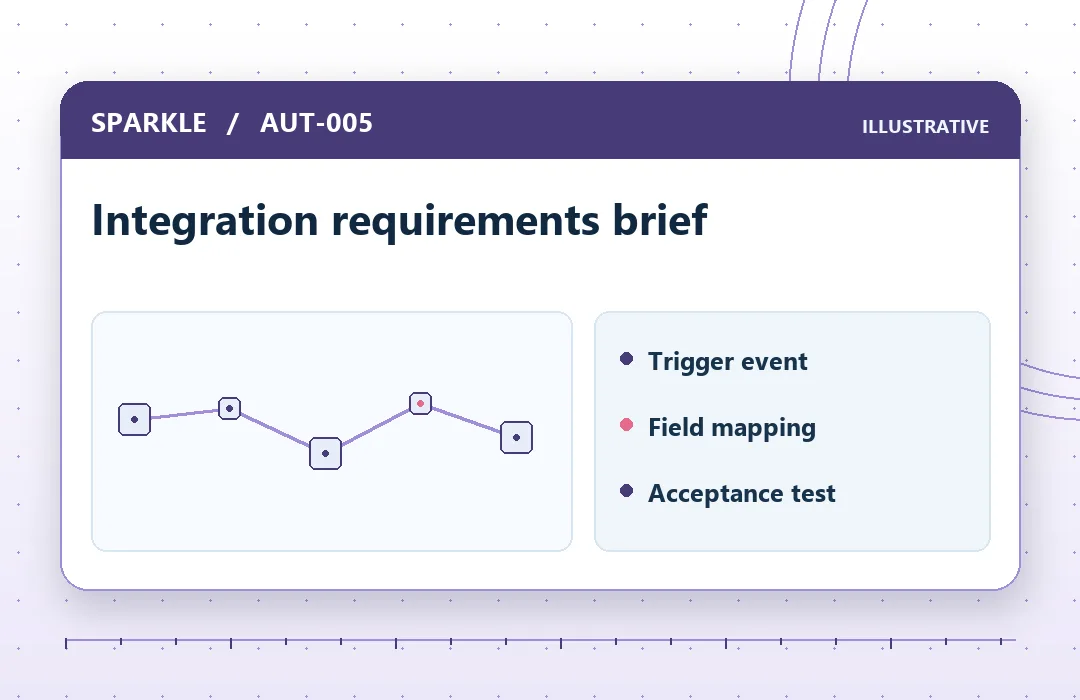
Use the specified triggers and test cases to agree expected behaviour before commissioning implementation.
We specify triggers, fields, error paths and acceptance tests for one proposed integration.
In the Integration requirements brief, follow “Trigger event”, “Field mapping” and “Acceptance test” to check the handover against your original question.
An integration brief can describe a goal without saying what starts the flow or what happens when a record fails. The service is intended for operations and systems owners. Use the specified triggers and test cases to agree expected behaviour before commissioning implementation. It is useful when your team can identify the decision the work needs to support and name someone to review what comes back.
The target workflow, current steps, system owners and common exceptions. Before work starts, explain how the result will be used, which inputs are already approved and whether access or material must come from someone else. Flag gaps in the current information early so they can be handled within the scope or recorded for follow-up.
Confirm the authorised systems, Specify fields and exception paths and Write acceptance tests. The work takes place remotely through an agreed channel. We identify questions that affect the outcome, confirm where your team needs to make a decision and explain any assumptions that remain at handover.
Indicative delivery after agreed inputs are complete: 3–7 working days. Platform, AI usage and connector subscriptions are separate. Timing may also depend on access, client review or decisions outside the agreed scope. Confirm who owns those dependencies before using the estimate for a launch or other commitment.
Begin by checking the integration requirements brief against the original question and the information your team supplied. Decide whether you can act on the result directly or need to collect evidence, obtain approval or commission a separate implementation. That distinction helps you turn the assignment into a practical next step.
Work is limited to approved inputs and authorised systems. Test normal and exceptional cases before any rollout. AI outputs need human review and should not be treated as final decisions.
Describe the extra work when you enquire. Any change to the published scope, file limits or timing needs separate written agreement.
Wait for instructions about the agreed channel. Share only the material needed for the assignment and confirm that your organisation has the right to share it.
We assess one repetitive office task and return a feasibility card with a manual fallback.
We review ten workflows and rank them on time saved, complexity and exception frequency.
Tell us about your business and the outcome you want to achieve.